Members only


Put a message on the portal.
Do a LinkedIn post.
Send an all-employee email.
That’s your communications done, right?
Wrong! These are all based on the assumption that putting out a message automatically means your audience has received, read and understood it.
That is the transmission model. And it belongs to a bygone era.
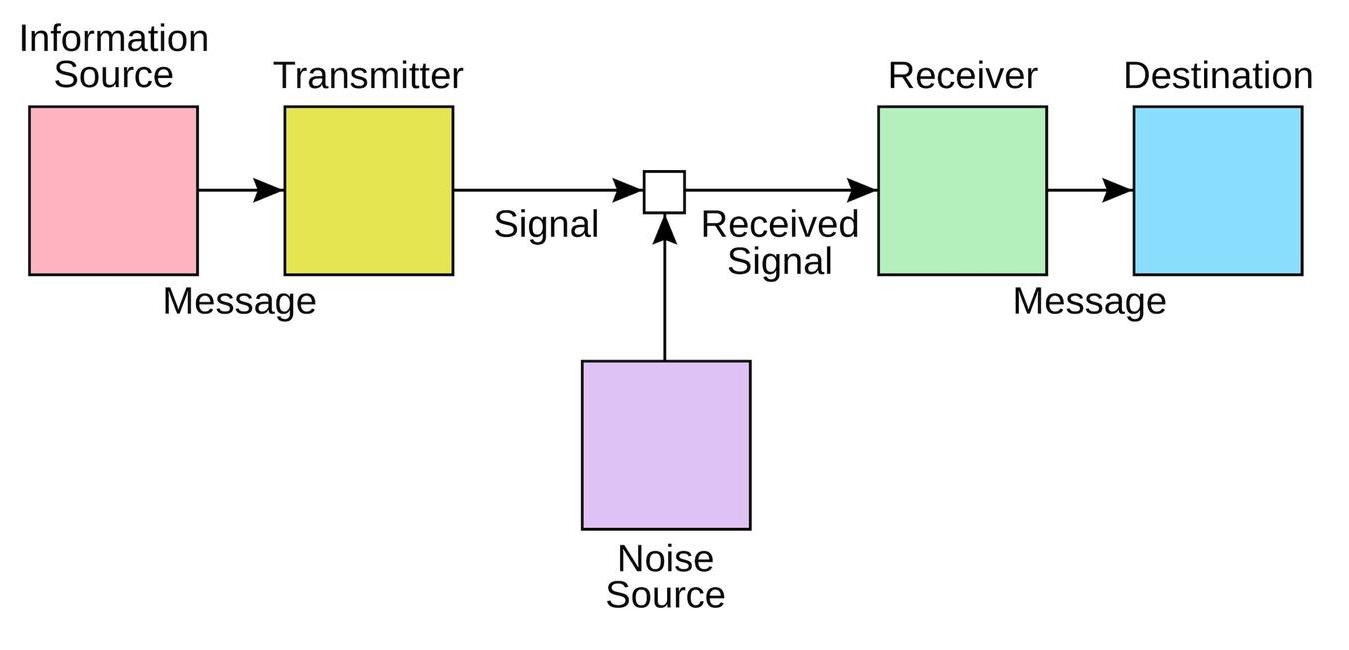
Back in 1948, the mathematician and engineer duo Claude Shannon and Warren Weaver developed the mathematical model of communications, which built out the communication theory behind simple telephone exchanges.
Why internal communication needs to be a conversation
The model was effective in demonstrating the many stages at which a message can be distorted between the sender and receiver, which Shannon and Weaver described as the “semantic gap” between intention conveyed and meaning received. But it received a lot of criticism from communications scholars for failing to recognise the important function of audience feedback to determine whether or not the message has been understood, and the need to refine the communication accordingly.
This seems like an obvious aspect of communication, but it changes the model completely.
Incorporating audience feedback, or considering the dialogue, discourse and conversation between the two parties, means that any model describing the process of communication must be circular, not linear. But despite this, after nearly 80 years and with multiple technological developments in that time, many organisations st treat sending a message as the same thing as being understood. Internal communication professionals are in a prime position to challenge this assumption.
James Carey clearly identified the shortcomings of the transmission model in 1989. He proposed an alternative: ritual communications.
(James Carey, Communication as Culture: Essays on Media and Society, page 18)
Building shared values through listening
In the context of internal communication, this means moving away from the transmission model of posting messages and sending emails and towards a “ritual” model of building representation into every decision-making level, and cohering the organisation around a set of shared values and beliefs.
In the information age, in the attention economy, the transmission model has never been more irrelevant. Audience understanding, listening and response needs to be at the heart of any internal communication professional’s philosophy.
Treating internal communication as simply sending messages is a misperception the profession continues to challenge. Where it persists, the familiar symptoms follow: disconnection between leaders and employees, a gap between values and actions, high turnover and quiet quitting.
Listening in practice: celebrating a university's centenary
Careful listening is essential, as audience responses can come from unexpected places. Recently, I’ve been working with the University of Reading, managing the strategic communications for its centenary year, and as part of this process I have been listening out for audience responses to gauge how well our messages are landing.
We quickly identified University employees as the most important audience for the centenary, because they doubled as messengers: advocates who were in a position to take the message of the centenary further to partners, events and communities. That made internal communication a top priority from the outset. If employees – both academics and professional services – understood the centenary and felt part of it, they would carry its messages into every corner of the University’s work.
Inspired by the centenary, one employee composed an original piece in four-part harmony. This is perhaps the purest example of ritual communication in the centenary year. The centenary’s messages were received and understood and became the inspiration for a new creative work that added to the shared story of the University’s 100 years.
Another employee walked 100 miles during the centenary year to raise money for Sport in Mind, a charity that supports mental health through physical activity. By linking his challenge to the centenary and its programme, he connected the University’s milestone with a wider community, carrying centenary messages to new audiences.
One meteorology professor’s independent project to catalogue the trees on the campus complemented the University’s sustainability principles so effectively that it became co-opted into the centenary celebrations. The project resulted in an online arboretum, which identifies more than 320 species across the campus and suggests walking routes, giving staff, students, residents and visitors a new way to explore and value the campus. The project demonstrated that the centenary’s sustainability messages have resonated widely enough for independent projects to reinforce them and, in turn, strengthen community engagement with the University.
Another response came from a student, reading the centenary edition of the student newspaper, The Spark. Students were identified as a lower-priority audience group for centenary communications, yet the centenary’s messages clearly reached them, and they responded independently.
The student said of the centenary edition: “Flipping through its pages, I wasn’t just reading articles. I was stepping into a conversation that started a long time before. The Spark isn’t just a paper, it’s the glue of the university community. It reminds thousands of busy students that we’re not passing through. We belong to something bigger.”
The response closely mirrors Carey’s description of ritual communication. The student describes joining a conversation that stretches across generations and a sense of belonging to something larger than themselves, even if they were only part of the University for a short – but formative – time in their lives.
Noticing, capturing and understanding these audience responses has helped me to evaluate where and how the centenary communications have been landing effectively. Most importantly, it’s taught me to scale back our own communication efforts, and instead amplify the organic responses, which have greater authenticity as they come from the voice of the audience itself.
The lesson is simple: kill transmission and switch to receiver mode. Start listening. And reshape your communications according to what you hear.
Zenia Duell is the founder of the Strat Comms Surgery, a consultancy dedicated to empowering organisations through bespoke strategic communications workshops. With a decade’s experience in communications, she honed her storytelling skills over seven years as an award-winning documentary producer for platforms like Netflix, the BBC, and Discovery, before spending three years serving corporate and government clients at the global strategic communications firm Edelman, working across their Middle East and UK offices. As a recognised voice in strategic communications, her ongoing PhD research actively contributes to academic discourse, while her top-rated ancient history podcast and published career guide for TV professionals demonstrate her practical ability to engage audiences, build communities, and offer actionable insights within and beyond the communications sphere. Read more from Zenia on Substack.