IOIC's editorial magazine for internal communication professionals. Insight, interviews and ideas from practitioners and leaders across the profession.
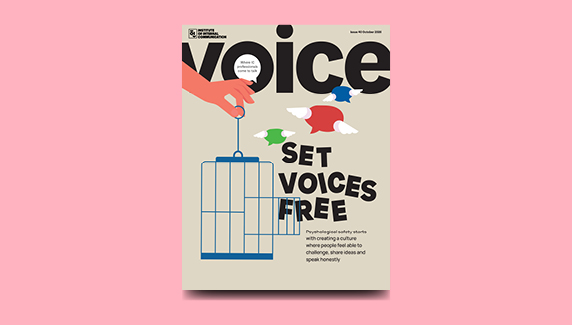
The latest issue of Voice is out now. And it's asking whether your workplace is really safe to speak up in. From psychological safety and leadership vulnerability to engaging frontline employees on their own terms, this issue tackles the issues that matter most to IC professionals right now.
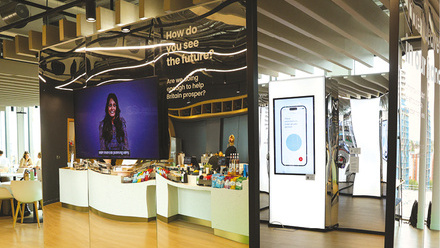
At Lloyds Banking Group, an immersive installation helped employees connect emotionally with evolving priorities and recognise their contribution to lasting organisational change.
Workplace technology promises productivity, but disconnected tools drain employees’ time. Hannah Soye, chief people and culture officer at employee experience platform Haiilo, shares five things leaders should understand about digital friction.
Frontline employees are the face of an organisation, yet often miss important messages. How can internal communicators help them feel informed, connected and involved?
Jess Payne, internal communications officer at Jisc, explains how a workplace screening of People’s Emergency Briefing film can serve as a jumping-off point for discussing your organisation’s approach to sustainability comms.
Ben Whitter, founder and chief experience officer at HEX Organization and the World Employee Experience Institute, explains how internal communication teams can use employee personas to understand what colleagues need, personalise communication and create a stronger connection between employees and the organisation.
Speaking up at work takes courage, but creating a culture where employees feel safe to do so takes commitment. How can internal communicators help leaders build trust, encourage openness and create psychologically safe cultures?
Created in response to a rise in hand injuries across global operations, Tetra Pak’s “Take Five to Keep Five” campaign combined simple messaging, strong leadership visibility and close collaboration between internal communication and occupational health and safety.
When nobody asks a question or raises an objection, what can internal communicators reasonably conclude from the silence that follows? Peter van Poelgeest reflects.
Network Rail replaced its unreliable, admin-heavy intranet search with a personalised, AI-infused Microsoft Search experience for its 40,000+ colleagues. Here’s how internal communication helped rebuild trust, improve findability and shift colleague behaviour at scale.
As workplace risks evolve, organisations that invest in people, communication and culture will be better equipped to build resilience, respond to disruption and thrive in the future. Alison Arnot shares her advice.
Juan Pablo Nieva Gómez, a marketing specialist at a luxury cruise line, reflects on communicating with a global, non-desk workforce at sea – and why simplicity and visibility are key.
Kay Vessey, head of learning and development at H&H, explains why better internal communication starts with curiosity about the experiences, preferences and motivations that shape how people respond.
Neil Rodger, founder of Lifted Communications, shares how internal comms teams can use audio – particularly podcasts – to cut through noise, build connection and reach employees in a more human way.
Thomas Hall-Tse, VP internal communications – leadership and functions at Rolls-Royce, reflects on the importance of showing care and building leadership impact.
Internal communication can turn learning from a routine requirement into something meaningful. When IC, HR and L&D align, employees better understand opportunities, build skills and see clearer career pathways.