
What this report is
The IC Index 2026 asked 5,000 UK employees about their communication experience at work. This companion report goes back to the same data and asks a question the Index has not asked before: does the same message land differently depending on who is receiving it, and personality may be one reason why.
The research was conducted with our long-standing partner Ipsos Karian and Box, whose analysis underpins the whole IC Index series.
For this edition we are delighted to have worked with The Introvert Space, founded by Richard Etienne, who bring deep expertise in how introverts experience the workplace and what it takes for them to feel seen, heard and valued. Their perspective runs through every finding in this report.
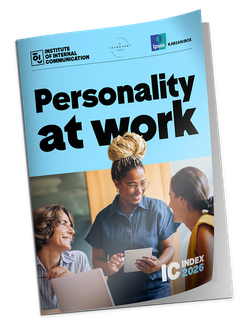
Inside the report
Some of the findings from the full IC Index 2026: Personality at work analysis.
Extroverts feel more positive about every part of the IC Index
Extroverts reported a more positive experience than introverts across every question in the survey, with gaps ranging from 8 to 22 points.
What makes people feel valued is not the same for everyone
Extroverts feel valued through leadership visibility and manager contact; introverts feel valued through relevance and clarity.
Senior leadership skews extroverted
Extroverts make up a quarter of the UK workforce but account for close to half of senior leaders.
Communication feels less relevant to introverts
Only 36% of introverts see people like themselves featured in internal communication, compared with 53% of extroverts.
Most feedback channels favour extroverts
Introverts are less likely to use most feedback channels. The annual staff survey is the exception, where participation is balanced.
A five-part model for more inclusive communication
The Introvert Space's P.A.U.S.E. model gives communicators five practical questions to reach a wider range of contributors.
You may also like.
You may also like




Members only

Members only