Members only
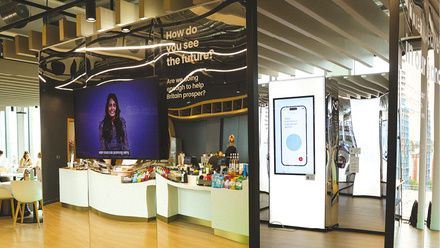

The rapid progress in communications technologies and the internet has diminished physical borders and hurdles.
When the productivity of labour in one country becomes too costly, it is easy to shift it to another country where people can perform the same job for much less. In fact, it does not even have to be a physical move of labour; in most service industries, the jobs are now conducted online. Anyone in any location on earth with internet connectivity and a phone line can provide services in technical support, accounting, data entry, data processing, graphic or web design, management consultation and so on. As Sirkin concluded in 1996, “the struggle of globality is learning to live with many-ness”.
It is up to us to learn the tools to build a global business any time, any place.
Global thinking means the production of new knowledge and wisdom, and requires an understanding and acceptance of doing business in different ways, across borders. It means finding common ground for collaboration, goal achievement, profit maximisation and sustainable growth. It means multi-stakeholder partnerships and what we call “unanticipated” partnerships.
Entering the 4th industrial revolution
Globally expanding businesses require a wide range of expertise and knowledge from different cultures. We must train managers to “think global but operate local”.
This is happening because of technology and innovation. Like it or not, we live in an era of artificial intelligence and the 4th industrial revolution (4IR). 4IR refers to the ways we create, share and distribute information and value. It changes how we see ourselves and how we act.
We want this era to be empowering and human-centred. Companies must think of their human capital and diverse human talent as their asset. Technology is disrupting the established work model as well as the employment model.
Perhaps we are witnessing a whole new make-up of the labour market. Today, we must think systems, not technologies; human networks and how we systemise and connect them, and how we help them communicate. We must empower, not determine; by design and not by default. Our world has paradoxically become smaller in size, but unlimited in potential for communication, collaboration and change.
Innovation and new technologies are abolishing borders. Yet, at the same time, they create challenges and push for a major mind shift. Today, it is imperative that we think from a global perspective and adapt to a rapidly changing reality.
Technology is disrupting traditional work models
The developments in technology have disrupted severely the traditional models of production, product and services distribution, and the very nature of work and collaboration. Barriers and hurdles are coming down, giving people the opportunity to participate in a massive online conversation and access new markets and opportunities. This transforms the world as we know it and is catapulting us beyond the limited and local, to the sphere of unlimited and global. It transforms our workplaces, too. It is clear that old solutions cannot work in this new era.
Above all, the cross-fertilisation of ideas, talent and expertise and development of a new code of conduct can turn a good company into a great company; it is the opportunity that all organisations that wish to secure sustainability and growth must seize. But how?
Leaders must embrace diverse workplaces
Everything begins with visionary leadership. It is the leader of the organisation who needs to have an innovative mind and embrace a culture of diversity and continuous learning.
The expanding size of the global economy and the limited capacity of traditional governments and their international institutions to govern this economy are creating an asymmetry, which results in failing governance. To achieve global expansion, the management’s strategy must include cross-border network expansion and partnership building.
In a global organisation, it is necessary that leaders examine local issues, domestic demographics, and social and cultural dynamics. It is also important to pay particular attention to cross-cultural awareness and ensure there is an understanding of local mindset when building local alliances. For example, in a large and regionally diverse country such as China, it is important to carefully assess and adapt to market conditions and cultivate government relations. A combination of market and non-market strategies must be applied for partnership-building as well as risk-management purposes.
Inevitably, there are conflicting demands from local stakeholders and corporate headquarters, which may create tensions. One major concern is around the cultural similarities, differences and histories between host and guest. This issue can be addressed through an intense study of cultures and by bridging gaps through employing managers that command the cultural fundamentals of host countries.
Create organisational energy by sharing the challenge, the inspiration and the vision and by activating people to produce tangible positive change.
Internal communicators can launch key initiatives and seek to achieve breakthrough responses and results. Introduce regular cross-cultural and diversity training and team-building initiatives, and work with external experts who can assess the level of cultural “disorder” within the organisation.
In other words, review how aligned the values of the organisation are with the values of staff. Through the same process, discover the negative values that prevent the organisation from maximising its output potential, employee engagement and growth. Take advantage of the online tools that bring your people closer – wherever they are based.
Corporate leaders must have the wisdom to bring on board external experts who can do this assessment and help introduce initiatives and policies – and messaging – that will establish a sounding board for the company on its global journey.
Employees need to cope with cultural differences in positive ways, with a respect towards new cultures and willingness to learn and adapt to them. They need to acknowledge the significance of cultural diversity, and show a readiness to embrace initiatives and opinions regardless of which culture they come from. Employees need flexibility to move around in culturally prolific environments.
Use dialogue to build international stakeholder relationships
Doing the right thing is complicated in today’s complex business, and political and geostrategic ecosystems. Relationships with stakeholders operating across countries, especially in high-context cultures, remain a challenge. Yet the relationship is the last driver of sustainable business value that gurus have not seriously emphasised.
This requires dialogue and diplomacy skills usually not part of the armoury of CEOs. Aggressive individualism is no longer a sustainable basis for enterprises wishing to deliver both economic and social value. They now need to lead for stakeholder value, aligning organisational vision with cultural values.
A company must define its own corporate values as a global entity. However, it must take into account both its local markets and potential clash of cultures among employees, and accordingly adapt its internal policies and initiatives.
Businesses today are grappling with burning environmental issues of climate change and resource scarcity, as well as immigration, poverty, disease, illiteracy, population growth, and ageing societies in some parts of the world and young populations in others. These realities require a look at systems in their entirety and the implementation of holistic solutions.
The risk is that siloes always impede this and allow short-term thinking to prevail, when what is required is to embed environmental and ethical practice throughout the organisation.
Four years ago, Global Thinkers introduced a new method enabling cultural transformation within companies and organisations: VALORE™ (Values-Based Leadership & Organizational Excellence). It is a concept developed by Global Thinkers through which we help companies understand the importance of adopting a values-based shared vision that leads the company to high performance.
With this programme, leaders learn how to gain insightful and deeper understanding of the existing organisational culture and successfully implement an effective transformation process that maximises outputs.
VALORE™ is a strategic tool that helps valorise employee and other important stakeholders’ potential for growth, profits and sustainability. Why is this important? Values-driven organisations have high levels of employee engagement; they generate higher earnings; they are more profitable, more customer focused, and more productive – they have high retention rates and low absenteeism.
They also generate more customer loyalty and societal goodwill. It is critically important to also know your company’s weaknesses so that you can target these and make the training and initiatives effective, results driven, measurable.
What do we mean by culture?
Businesses and employees need to be aware of traditions, customs, religious diversity, gender issues related to culture, and language – as in the different meanings of words and phrases across different cultures. Also the sense and style of humour can vary significantly from one country to another, as does body language.
We need to understand what we mean by culture. It refers to the cumulative deposit of knowledge, experience, beliefs, values, attitudes, meanings, hierarchies, religion, notions of time, roles, spatial relations, concepts of the universe and material objects and possessions acquired by a group of people in the course of generations through individual and group striving.
Now, corporate culture refers to the shared values, attitudes, standards and principles that characterise members of an organisation and define its nature. Corporate culture is rooted in an organisation’s goals, strategies, structure and approaches to labour, customers, investors and the greater community. As such, it is an essential component in any business’s ultimate success or failure.
Using values to build a dynamic culture
The core of a culture is formed by values. There are different values across different cultures and nations. For example, in the US, among the dominant values of the nation, we find equality, individuality, ambition, “the sky is the limit”, freedom, mobility, safety, competition, efficiency. In Japan, however, we come across a different set of national values: obligation to the group, behaving according to status, harmony, effort, self-improvement, self-criticism, collectivism.
Cultural expectations and values are represented in the individual’s mind and may act as guiding principles for the selection of specific dynamic decision-making strategies. Values tell us what broad decision-making strategy we should follow, and why we should follow it.
According to several cross-cultural studies on individualism and collectivism, the US and Germany are countries with more individualistic value orientations and Venezuela and India are countries with predominantly collectivist value orientations.
Let’s consider an example of the food giant, McDonald’s. The company has a global presence; operating in more than 100 countries, serving 70 million people every day. Its headquarters and senior management are US-based, but its local operations are run by local managers and are franchised. Their menus are customised according to cultural habits and local taste preferences in every country.
There is pressure to find and keep the best people – and this will increase. Employee fulfilment is the way to keep the best people and have a successful company. The best people usually are very creative, and creativity is the new frontier of competitive advantage. Companies all over the world can use fantastic technological tools that enable them to do business, monitor their markets, handle effectively cross-country project management and so on and so forth.
Many of the current graduates entering the workforce have similar educational backgrounds from one of the many international business schools. So if you have the same technology and people with the same qualifications, then the competitive advantage moves to the culture of the organisation and to the original, and global, thinking of its people.
Talent is great, but it must be kept updated with new trends and provided with systematic training. Invest in your people, your shining talent – that is the best ROI for any company.