Members only
An announcement about an AI assistant can sound reassuring: it should mean less routine work, faster drafts and more time for judgment. But the announcement may leave one question unanswered. Which part of the routine work did people value in the first place?
Consider a fictional communications team: Maya prepares a weekly briefing for colleagues across the organisation. An AI assistant now produces the first draft from approved internal updates. It saves Maya some writing time, but she valued choosing which issue deserved attention and explaining why it mattered.
Her manager sees the benefit: the drafting task is quicker. But Maya sees it as a change in who sets the agenda.
This fictional scenario offers five questions internal communicators can use to make discussions about changing work more specific.
You don’t need to offload an entire task just because one part of it is routine or can be managed by AI.
Consider a recent instance where doing that routine work – or at least an element of it – felt worthwhile. Was it solving a difficult problem, helping a colleague, exercising expertise or seeing their contribution recognised?
For Maya, the answer might be the conversation with a project lead that reveals an issue missing from the written update. Faster drafting would not replace that human conversation – but it might create more time for it.
Have discussions with your team to distinguish the steps people would gladly delegate from those they want to keep. The answers would clarify your team’s skills and interests at this moment.
“A human remains involved” can mean many things. A person might choose the sources, challenge the framing or simply click a final approval button. Those roles provide different opportunities to influence the result.
The next question concerns what the person can actually change. Can Maya reject the assistant’s selection of topics? Can she request more evidence, rewrite the briefing or stop it going out?
In your team, if you decide a human will review the AI draft, explain what the review covers and what happens if the reviewer is not satisfied.
If you only review the final output of a job, it can be easy to miss the important choices made during the input stage: a point of uncertainty kept in, a sensitive detail omitted, a claim checked with its owner.
Maya and her manager could revisit an old edition and discuss these choices. They could then decide which choices need explicit prompts or further clarification and which unresolved issues could prevent publication.
The purpose is to identify what stages of the original human workflow needs to be preserved.
When writing becomes editing, valuable work may become less visible. A clean final draft does not show every unsupported claim that someone removed or every conversation needed to resolve an ambiguity.
For Maya, a short discussion of significant editorial decisions could be more informative than counting the number of changes to a draft.
In your team, how will you explain ownership and acknowledge this work? The number of corrections alone would tell you little: many edits might reflect a poor first draft, while one carefully judged intervention might matter greatly.
Make sure the approach fits the task and avoids turning recognition into another reporting burden.
Before introducing the assistant, the team could establish a date for reviewing the new workflow and testing the enthusiasm for AI. You should come together at a certain point and reflect on concrete examples of improvements, something lost or something still unclear.
A concern may point to training, workload, unclear authority or a valued responsibility that has quietly disappeared.
At the next review, Maya might report that she has more time for interviews. She might instead find that checking drafts consumes the time she previously spent talking to colleagues. Either answer gives the team something specific to examine. The question is whether the organisation gives the team space to discuss those findings and the authority to act on them.
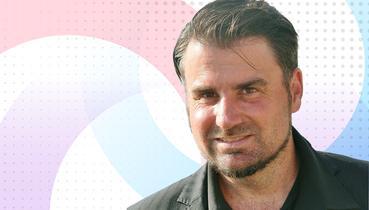
Andreas Ehstand is an independent researcher based in Starnberg, Germany, working on questions of human–AI collaboration. His AUGMANITAI project explores how people describe, organise and review AI-assisted thinking and work. He is interested in the decisions that remain with people when parts of a task are delegated to an assistant.
Photo credit: Hans-Peter Höck