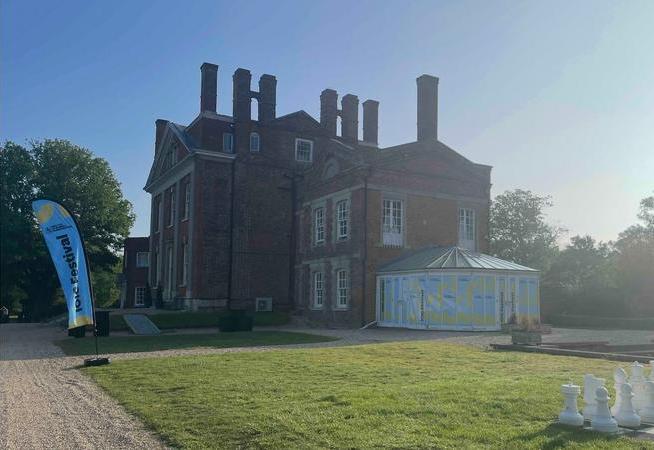
We are back for Day 2 of the IOIC Festival at Warbrook House in Eversley. If you missed it, here are the highlights from Day 1 of the Festival.
16:12
What a fantastic couple of days. Expert insight and ideas, and enlightening conversations – and it didn't rain. My five takeaways – three IC-related:
- Be bold and courageous – it might not cost you anything to do something out of the ordinary to help you stand out. If it doesn't work – well, at least you tried.
- Show your working out – make sure you have the evidence to hand when giving leaders advice around moving forward.
- Be authentic – have real human conversations and be empathetic... and don't be surprised if AI can help with this.
And two non-IC-related tips:
- Don’t pour your leftover tea with milk in your house plants (milk contains fats and proteins that rot the soil).
- Don't confuse daffodils with spring onions
14:49
The seven stages of professional relationships:
- Recognise
- Know
- Like
- Trust
- Support
- Advocate
- Friend (moving into your personal network, although this is not the goal – it just sometimes happens; the goal is to get support and have an advocate)
Andy Lopata: “We’ve all grown up hearing the same phrase: It’s not what you know, it’s who you know.
“That’s not the full picture. It’s who knows you – and what they know and say about you when you’re not in the room.”
14:40
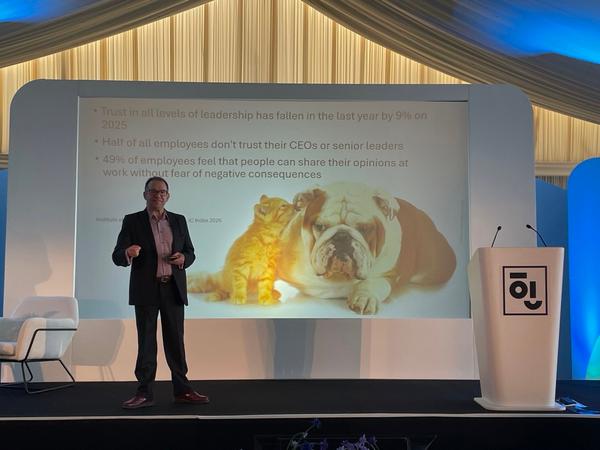
Andy Lopata, an expert on professional relationships, asks: do your leaders trust you enough so that they listen to you and will trust your guidance?
“Research last year shows that companies that measure trust as a board-level KPI are over three times more likely to report stronger profits. This isn’t fluffy stuff. It has bottom line impacts.”
14:10
Stop teaching your AI agents what to say. Start teaching them how to sound.
Ask your AI agent to read your script aloud and see if it makes sense and then reword it.
Lynsey Hutchison: "The future isn’t AI that sounds like everyone. The future is where AI is going to help leaders sound even more like themselves."
14:01
Julie Ackley from Barclays summarises research around why employees feel messages are seen as authentic or not authentic.
When not authentic, a third of people said it was down to tone – scripted, repetitive, “sounds a bit BS”.
Of those who said messaging was authentic, 37% said it was down to honesty – “It doesn’t feel like we’re whitewashing – we’re calling it out as it is, good or bad”.
The third point was relevance. When it is inauthentic, people feel there is corporate jargon and buzzwords are overused. “You are creating a corporate voice, separate from the people impacted by it,” says Julie.
When it is authentic, “everything is presented in a way that is relatable to what I do”.
How can we help leaders dial up the perception of authenticity?
- Take the name off the message. Step back and look at what each leader is saying. Does it make a difference who is saying it?
- Throw the script in the bin. Do you want to be your leader’s ventriloquist?
- Be honest around what’s not being said
- Challenge – is efficiency killing relevance? Tailoring takes time. That’s why we end up dropping stuff – but people follow people. They want a human connection, so this work is important.
13:50
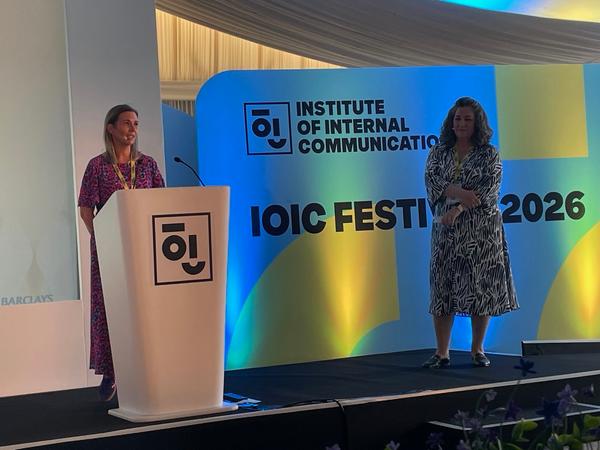
Lynsey Hutchison from Barclays: “Authenticity feels like it is conflict with AI. But what if they could be incredibly good bed-partners and we could harness AI to up the level of authenticity from leaders?”
Research shows people are not necessarily anti-AI, but anti-synthetic leadership.
When leadership feels real, advocacy follows.
Barclays took three elements of comms IC was in control of: visible leadership, clarity of messaging (specifically strategic priorities of Barclays), and comms feel authentic.
- When none of those things are in place you have a –51 eNPS.
- If you only have visible leadership, the score is –36.
- When you have visible leadership and clarity of message, the score is still –15.
"You can be so sure that the channels and mechanisms are in place, but you need to help leaders flex their muscle and be a great authentic leader. When all three are in place – when comms feels authentic – the eNPS soars to +50. Our job becomes: how do we get all our leaders to connect with the message?”
13:22
Niluka Kavanagh, founder, adviser, Futurist, says we need to move from information to meaning.
“Why are WE doing this? We are fundamentally wired to be like those around us. Think about the power of “we”.
“When we think about ‘what does this mean for me?’, bring in audience comms segmentation and think about who you are talking to in your workforce. How should you change parts of your message to involve them?
Leaders who ask for feedback are rated in the top 10% for overall leadership effectiveness. When you listen, you learn what words people are using.
13:03
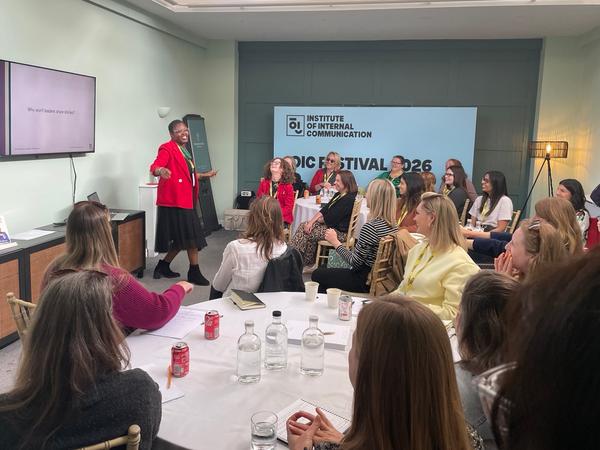
Beatrice Ngalula Kabutakapua is talking about storytelling – and why leaders don't always believe in it. "They ask why. How should we do it? What’s the point? I feel uncomfortable."
Translate what you are doing.
- When leaders ask why, they are asking for context.
- When they are asking how, they are asking for a framework,
- When they say there is no point, they are after evidence.
- When they say they feel uncomfortable, you have to coach them.
Expanding on the last point, Beatrice says: "When it comes to coaching, it is about coaching the leader before it's needed. Not crisis coaching.
"You will need lots of empathy for yourself and your leader. It is not about your life. You are the medium.
"Ask the right questions – expansive questions, that dig deeper. Not yes or no. The more you ask why, the more you get to the deeper roots."
12:12
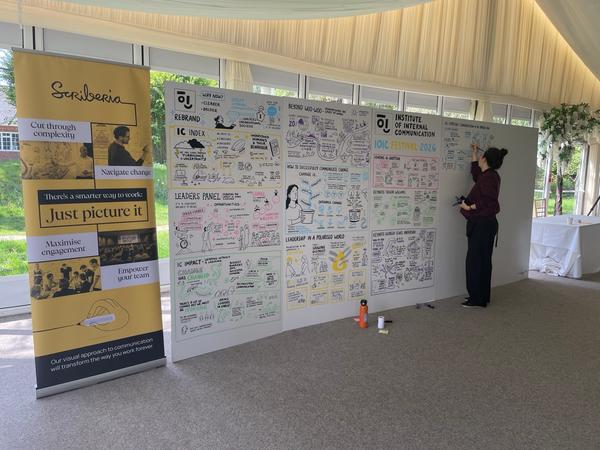
Scriberia has been putting key words and advice from the Festival into a fantastic visual display in the Inspire zone – it's looking great!
11:47
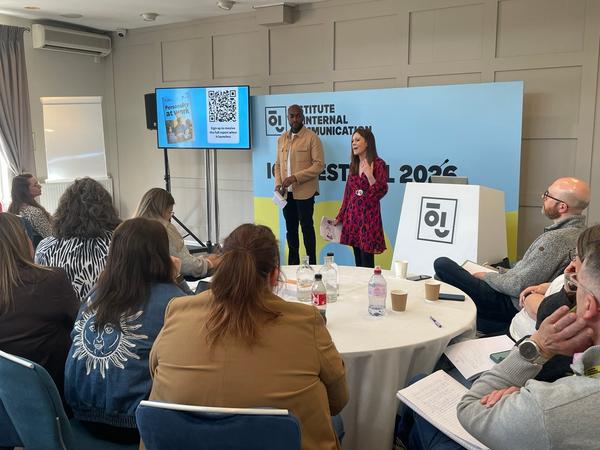
In the James Room, Richard Etienne from The Introvert Space and Sarah Birtwistle from Ipsos Karian and Box, are talking about new behavioural insight and the forthcoming Personality At Work survey report.
Richard, on how to support introverts to talk to other people without feeling forced: “When we are together we interact well. We need each other, but we (introverts) sometimes need champions and advocates to talk on our behalf."
Sara, on encouraging everyone to use social spaces: “Think about variety of channels and make sure they are enabled for everybody so that people can choose how they contribute.“
11:22
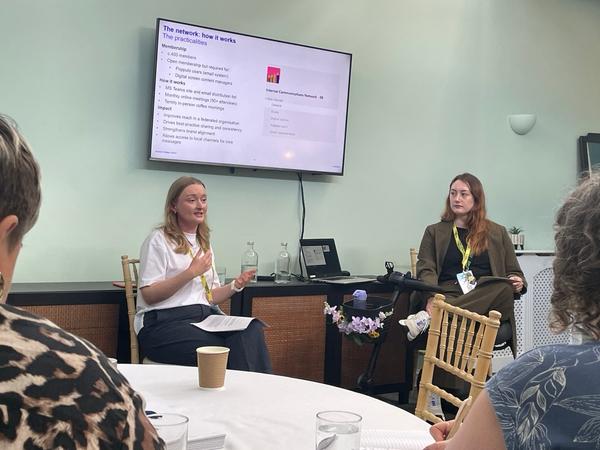
Beth Lloyd and Sara West from Imperial College London are talking about how to build a high impact IC network that connects communicators across the university.
Imperial College London's IC network is run by the core IC team. It has around 400 members and is open to anyone who thinks joining would be useful to their role (but required for all Poppulo users and digital screen content managers). They come together through Teams messages and monthly online meetings with more than 50 attendees, while termly in-person coffee mornings are an opportunity for colleagues to get together and build relationships (“It’s all done without a budget. We have to be clear that people should come along with their own coffee!”)
The network has had a positive impact, says Beth: “We’re able to share best practice and plan better. We’ve seen an increase in engagement in some of our strategic projects. It’s also helped strengthen brand alignment.
“It’s a two-way benefit. For us, we can get our strategic messages into local channels. We find that some staff, especially academic staff, have a strong affiliation to their department, so if they hear it from their head of department, they are more likely to listen than hear from the central team.”
10:52
In the Wellington room, David Brown from Heriot-Watt University is talking about how to drive sustainability engagement through internal comms.
"One thing I have tended to find in my conversatiions is that if an organisations is trying to introduce a standalone sustainability change, they meet resistance. But if they wrap it up with something else – say an operational change, whereby sustainability is presented as a part of it – they tend to get more buy-in, including from leaders. I think with sustainability, the timeframe often seems so far away that people are more likely to put it off taking action."
10:45
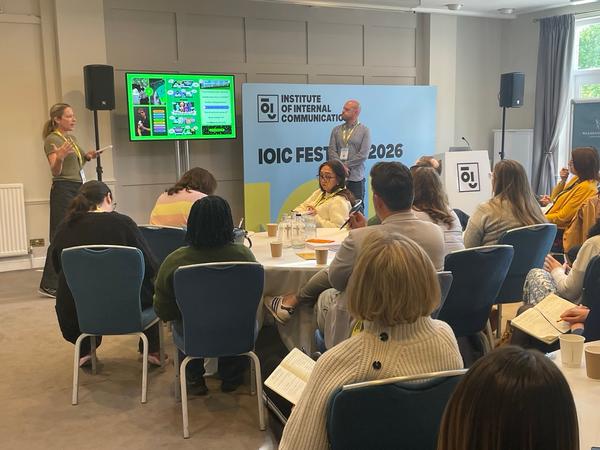
Viv Morgan and Ross Duncan from Lloyds Banking Group are talking about how the colleague communications & experience team helped increase engagement through a major transformation.
Viv talks about how humour, and positivity were key to the storytelling.
“We had a squad approach. We partnered with our social and media teams. We wanted to make the progress unmissable, so that employees couldn’t walk through the building or log on without seeing the evidence. We started to feel more comfortable about talking about the progress and breakthroughs as they emerged rather than waiting until the end when everything was finished and polished. We saw a lot more constructive criticism and pride as a result.'
Ross sums up the three key takeaways of good change comms:
- Explaining the why is non negotiable – even if people don't like it, you can bring them on board if they understand it.
- Have one evolving story. Repeat repeat repeat.
- Be patient. It’s not easy. It takes time.
10:27
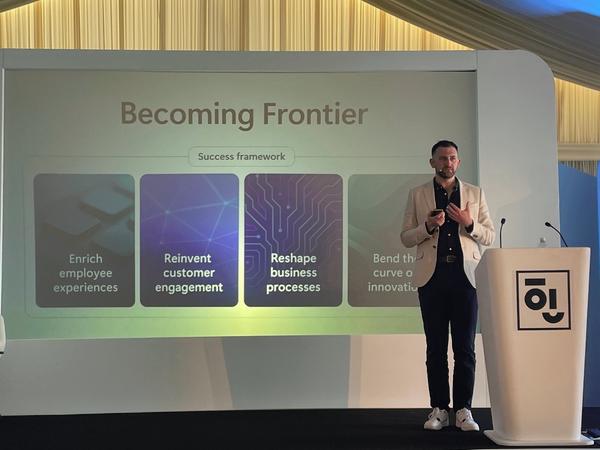
Findings from Microsoft’s Work Trend Index shows that the number 1 success factor in organisations for introducing AI was organisational culture.
“That’s what we do in IC,” says Microsoft’s Jon Bates. “It’s us talking to stakeholders, sharing success, rewarding people for their experimentation.”
As with any organisation, at Microsoft, there are hundreds of ways in which you can use AI. “Having a framework in place before you think of AI transformation is useful.”
Where do you start? Jon suggests four goals:
- Enriching employees experiences
- Reinvent customer engagement – Create personalised sustainable experiences
- Reshape business processes – What are the things you can do in your organisation to optimise a workflow or change a process?
- Bend the curve on innovation – How do you celebrate innovation faster, make a new product come to market quicker?
09:54
Georgia Lewis Anderson: “AI is a talented junior, but you are the creative director.
“We can feel guilty that AI is happening to us, but we don’t have as much autonomy as we should. We are happening to it.”
09:45
Employ AI as a cognitive prosthetic, advises Georgia Lewis Anderson – “a bit like an entrepreneur bringing someone into the business you can’t do”.
“Take a long hard look at your skills: what can you do and what can’t you do? What are the boring repetitive tasks you hate doing? AI can enhance the grey spots that make you greater than the sum of your parts.”
09:39
Things that make a good prompt:
- Context – what mood are you in? Has the person you emailed said no five times already?
- Persona – who is your AI tool answering as? Give the tool a ‘hat’. It gives them a lens to pull from the right library.
- Task – what exactly are you asking it to do?
- Constraints – what do you want it not to do? D you want it to not use overused phrases?
- Format – how do you want it delivered? Bullet points? A LinkedIn post? In a rap format?!
Georgia Lewis Anderson: "Be clear on the problem. We've all experienced hallucinations, or AI has given us something that is not quite what we wanted. If we haven't prompted clearly and put our problem defintion in, AI will do what it wants."
09:33
Georgia Lewis Anderson notes the importance of putting the human touch in machines. "We warm to things when there is a smiley face.
"AI is a powerful tool to help you get your point across if we use it to help us think, rather than think for us."
09:29
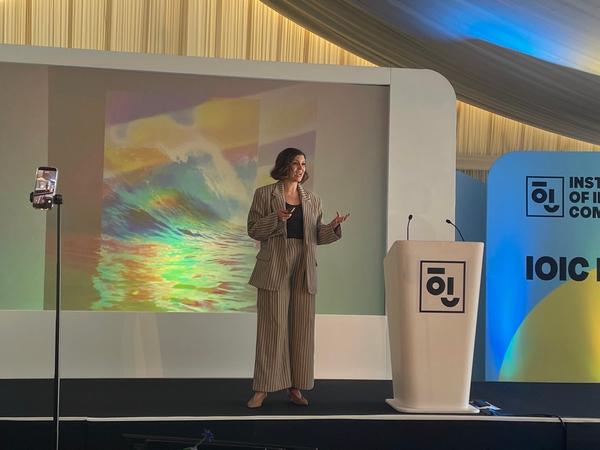
Georgia Lewis Anderson, talking about AI: "I go into businesses to talk about technology, but I end up talking about emotions. It’s overwhelming. Recently a new emotion has come out: shame. It’s a natural human emotion. The world and its wife are AI consultants, and it’s taking over our work.
"What I’m seeing is explorers vs avoiders. It can feel excited to plug in bits and make things. The technology is evolving so quickly there are no blanket rules. There are avoiders who are not into it. Do we want to put our armbands on and ride this wave, or are we going to drown?”
09:22
Chief executive Jennifer Sproul reflects on content from yesterday's first day at the IOIC Festival, which generally covered the “really big realities and challenges” we are facing. The feedback from those sessions has been great, with delegates coming away with "pages full of notes and lots of practical takeaways".
Now we are looking forward to the first keynote of today: Georgia Lewis Anderson, an award-winning AI expert and leading technology speaker.
08:12
Morning. It looks like those early weather predications of drizzle were wide of the mark. It's going to be another sunny day. Just setting up for another packed day of insight.