Led by Working the Future, the Forum was an interactive experience, combining expert speakers with facilitated discussion groups that explored ideas and takeaways to implement in the workplace.
Opening the day, Cat Barnard, founder of Working the Future, reflected on the scale of disruption facing leaders: “Since the pandemic, we’ve gone from crisis to crisis,” she said. “The way we communicate is the glue that binds people together through thick and thin.”
With automation reshaping routine tasks, she challenged IC professionals to “get comfortable with transformation” and to consider how they will use the time and influence this shift creates.

Dr Alex Gapud
Trust in transition
Workplace anthropologist Dr Alex Gapud set the tone by exploring the evolution of trust across cultures.
“Work is social and relational – we never work as individuals,” he said.
Humans evolved as hunter-gatherers, dependent on trust, he explained, yet modern organisations often default to transactional relationships and an overemphasis on productivity.
“We value productivity, results, efficiency and performance,” he said, “but character and connection matter when you’re trying to build a work culture.”
For IC, his challenge was clear: how can communicators help leaders be visible, present and known – and ensure employees feel seen in return?

Dr Naeema Pasha
Dr Naeema Pasha examined the changing world of work through the lens of Industry 5.0, social identity and AI. As algorithms “classify, cluster and predict”, she warned that AI is setting new boundaries, potentially reinforcing division and isolation.
“When work becomes transactional, people rely on belonging,” she said. “When we are with our people, we feel strength. When we are not, we feel weakness.”
In a context where people can feel dehumanised or disconnected, leaders must double down on empathy and inclusion.
From broadcast to sensemaking
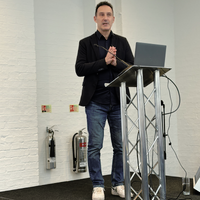
Howard Krais
Listening was the focus for Howard Krais, co-founder of True, who urged communicators to move beyond broadcast. While channels have changed little in two decades, employee concerns – from job security to the AI threat – run deep.
“While we focus on channels and content, employees are worried about cost of living, job security, AI threat, belonging. The concerns people have are not about content. It’s a trust problem,” said Howard. “The essence of good listening is the ability to hear and understand the perspective of others, and to respond appropriately.”
Done well, listening generates intelligence that drives performance and strengthens relationships.
Closing the day, Perry Timms, founder and chief energy officer at PTHR, introduced the concept of the polymorphic organisation – one that shifts “from broadcast to sensemaking, from campaigns to conversations”, while staying anchored to purpose.
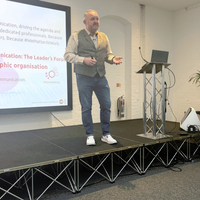
Perry Timms
“We think work and change are two different things, but work is change,” he insisted. “We’re not running one organisation. We’re running two – the future one and the legacy one at the same time. We must keep building the train as we flow. It’s leaders’ jobs to think about where we’re going.”
For IC, this means a shift In a world of continuous evolution, language, visibility and psychological safety become central design choices – and the future of the profession is, as the Forum made clear, something to be shaped deliberately.
“We’re running two organisations – the future one and the legacy one at the same time.” Perry Timms
Points of view
Through facilitated discussions, delegates at the Leaders Forum shared their views on trust and culture in the workplace.
“For years, we have been trying to focus IC on competency. How can we focus on character and people without being thought of as fluffy and the party planners?”
“It’s true that human stories are what people go to first, but it feels that those stories are an increasing luxury.”
“We should ask senior leaders: when was the last time you meaningfully connected with your people?”
“Comms by its nature reinforces in and out groups, by the way we target audiences. If a message isn’t appropriate to who receives it, you create an out group unintentionally.”
“We have created a fake sense of community through social media. Social media hacked our attention. AI is hacking our emotions.”
“Hybrid working is prompting discussions on trust… Building connection is difficult. Asking people to come in creates challenges, even though we know presence is important.”
“ERGs are there to create a sense of belonging and inclusion, but they could be seen as exclusionary.”
You may also be interested in
Members only
Members only

Members only
Members only