Members only
As corporate climate action relies so heavily on internal communication, there are various insights and takeaways for our profession to consider.
A key finding – unsurprisingly – is that climate deniers are thankfully now a virtually extinct breed. As it becomes more personal and ‘close to home’, 93% of the study’s respondents say they believe climate change poses a serious and imminent threat to the planet.
Edelman’s global research highlights how climate change ranks behind only job loss as a primary source of anxiety worldwide. 72% are concerned it will make life extremely difficult.
However, a mere 22% of respondents are optimistic we can overcome the challenges it poses. Climate pessimism – worrying about the crisis while lacking hope we have the means to address it – links to eroding public trust. Across the board, institutions are now seen as less credible voices on climate action.
While the report shows that business is the most trusted institution in general, trust in businesses to ‘do what’s right’ by the climate declined over the past year. Business is now less trusted than Governments and NGOs. Almost two thirds believe companies are not living up to their climate commitments, prioritising short-term profit instead. There’s a general perception of corporate greenwashing and that leaders are choosing not to act for fear of potential backlash.
Consequently, only experts and peers are now trusted to tell the truth when it comes to climate change.
One glint of optimism is public acceptance of the need to shift toward climate-friendlier lifestyles. 67% of respondents admit there’s a gap between how sustainable their lives are currently versus how they’d like them to be. Among those who recognise this gulf, 8 in 10 say take-up is stymied by high costs and a lack of public support systems to make low-carbon choices easier.
People want help to join the dots between climate policy and personal benefits – such as economic growth, new jobs and managing inflation. Highlighting tangible payoffs for individuals and communities can shift people from pessimism to the optimism that’s needed to spur greater climate action.
With public trust wavering and the stakes so high, institutions must double down on their efforts to be transparent. They must showcase progress that improves people's lives, while also addressing the existential threat facing the planet.
So where do the opportunities lie for internal communication professionals to place themselves at the heart of the change that’s needed? How can they best advise and support their C-Suite colleagues?
We identified four primary take-aways:
The best ways to convert climate pessimists include instilling a sense of trust in institutions. Internal and external stakeholders need to believe organisations will keep their climate commitments. They need to see climate progress and hear news that provides hope. They need to believe that solutions will provide a personal – and wider – societal benefit.
Restoring wider community trust and incubating greater climate optimism is more needed than ever.
As internal communicators, we must bring our colleagues along with us on that journey. We must create environments that enable the bolder decisions that ultimately curb emissions at the speed and scale that’s needed.
As interdependence and trust on climate change between countries continues to break down, we’re increasingly reliant on more localised communities and peer networks to drive change from the ground up.
We need to inspire colleagues by making expertise accessible and spotlighting credible peer voices. We must report more widely on climate actions and solutions – and not just the promises made.
Most importantly, we must remember the crucible for effecting change lies within our own organisations.
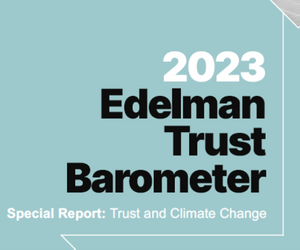
Edelman’s 2023 Trust and Climate Change Special Report can be found here: https://www.edelman.com/trust/2023/trust-barometer/special-report-trust-climate